Buy cthirion.eu ?
We are moving the project
cthirion.eu .
Are you interested in purchasing the domain
cthirion.eu ?
domain@kv-gmbh.de · 0541-91531010
Buy cthirion.eu ?
Is it utilitarian or selfish?
It depends on the specific situation and context. Utilitarianism is a moral theory that focuses on maximizing overall happiness or well-being for the greatest number of people. If an action benefits the majority of individuals and promotes the greatest good, it can be considered utilitarian. On the other hand, if an action primarily serves one's own interests without regard for others, it may be seen as selfish. Ultimately, the distinction between utilitarian and selfish behavior is determined by the impact on others and the underlying intentions of the individual. **
What is a utilitarian action?
A utilitarian action is one that aims to maximize overall happiness or well-being for the greatest number of people. In utilitarianism, the morality of an action is determined by its consequences, with the most ethical action being the one that results in the greatest overall benefit. This ethical theory focuses on the outcomes of actions rather than the intentions behind them. Utilitarian actions prioritize the greatest good for the greatest number of individuals, often requiring individuals to make decisions that may not benefit themselves personally but benefit society as a whole. **

Similar search terms for Utilitarian
Top-Angebote
Products related to Utilitarian:
-
Philips MSD Platinum 20R Lamp for the Clay Paky MythosPhilips MSD Platinum 20R Lamp for the Clay Paky Mythos Clay Paky Mythos Specifications: Technology: High-intensity discharge Type: Metal Halide Watts: 470W Ends: Single-ended Overall Length: 72mm Diameter: 58.5mm Burning Position: Universal Arc...349,99 $*Shipping: 0,00 $Secure redirect to the provider
-
Penguin Stephen Fry Greek Myths Series 4 Books Collection Set (Mythos, Heroes, Troy and Odyssey)Stephen Fry Greek Myths Series 4 Books Collection Set (Mythos, Heroes, Troy & Odyssey): Mythos: In Stephen Fry's vivid retelling, we gaze in wonder as wise Athena is born from the cracking open of the great head of Zeus and follow doomed Persephone into the dark and lonely realm of the Underworld. We shiver in fear when Pandora opens her jar of evil torments and watch with joy as the legendary love affair between Eros and Psyche unfolds. Heroes: In this companion to his bestselling Mythos, Stephen Fry brilliantly retells these dramatic, funny, tragic and timeless tales.Join Jason aboard the Argo as he quests for the Golden Fleece. See Atalanta - who was raised by bears - outrun any man before being tricked with golden apples. Witness wily Oedipus solve the riddle of the Sphinx and discover how Bellerophon captures the winged horse Pegasus to help him slay the monster Chimera. Troy: When Helen, the beautiful Greek queen, is kidnapped by the Trojan prince Paris, the most legendary war of all time begins.Watch in awe as a thousand ships are launched against the great city of Troy.Feel the fury of the battleground as the Trojans stand resolutely against Greek might for an entire decade.And witness the epic climax - the wooden horse, delivered to the city of Troy in a masterclass of deception by the Greeks . . . Odyssey: Setting sail, hero Odysseus dreams of lying in the arms of his beloved wife Penelope, and of teaching his son Telemachus a warrior’s ways. However, gods toy with the desires of little mortals. Angered by this upstart’s presumption, Poseidon – God of the ocean realms – curses our hero to wander the seas for ten long years.29,99 £*Shipping: 2,99 £Secure redirect to the provider
-
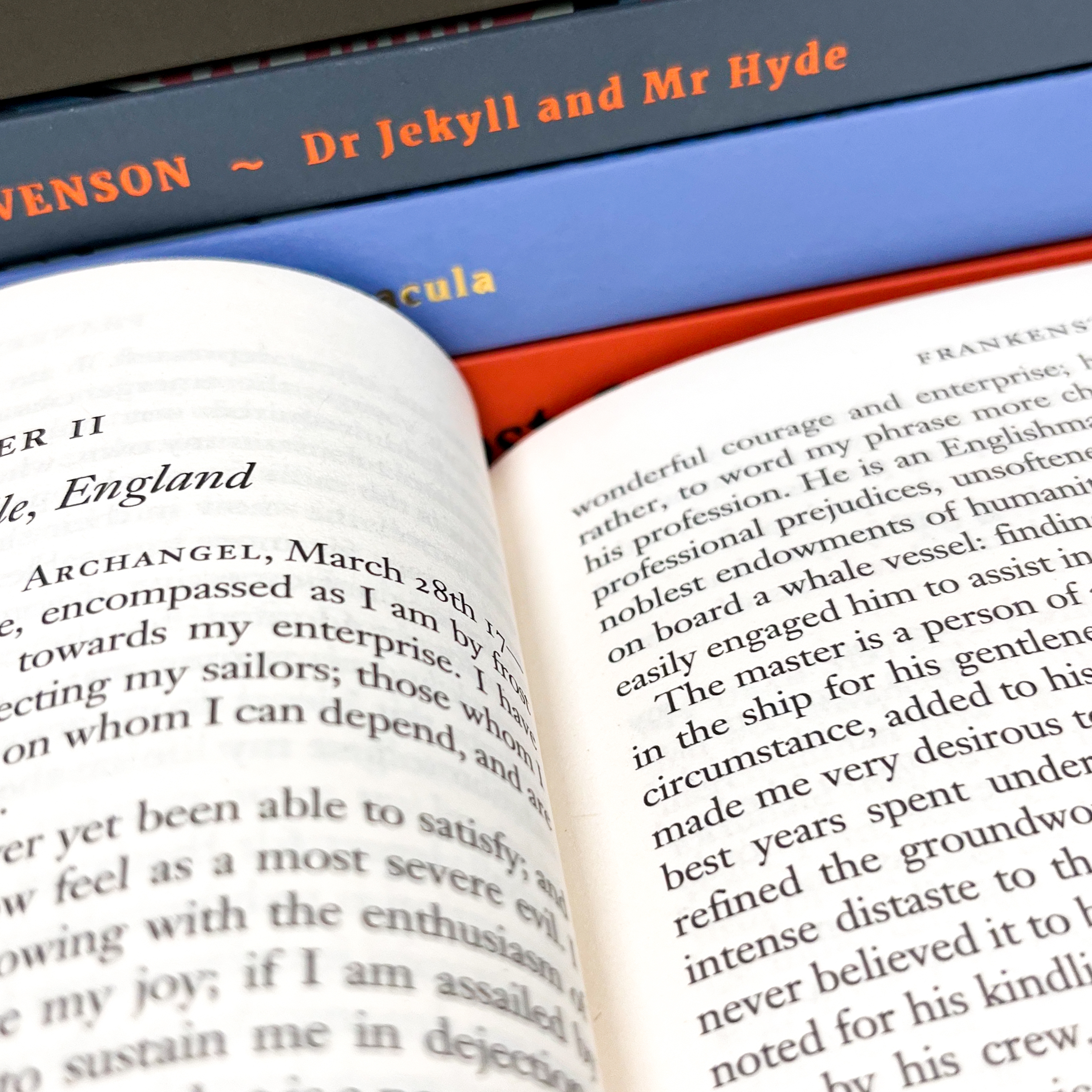
Wordsworth Editions Great Horror & Fantasy 6 Books Collection Set – Dracula, Frankenstein & Classic Horror CollectionFrankenstein Frankenstein is the classic gothic horror novel which has thrilled and engrossed readers for two centuries. Written by Mary Shelley, it is a story which she intended would ‘curdle the blood and quicken the beatings of the heart.’ The tale is a superb blend of science fiction, mystery and thriller. Dracula 'There he lay looking as if youth had been half-renewed, for the white hair and moustache were changed to dark iron-grey, the cheeks were fuller, and the white skin seemed ruby-red underneath; the mouth was redder than ever, for on the lips were gouts of fresh blood, which trickled from the corners of the mouth and ran over the chin and neck. Even the deep, burning eyes seemed set amongst the swollen flesh, for the lids and pouches underneath were bloated. It seemed as if the whole awful creature were simply gorged with blood; he lay like a filthy leech, exhausted with his repletion. Dr Jekyll and Mr Hyde In seeking to discover his inner self, the brilliant Dr Jekyll discovers a monster. First published to critical acclaim in 1886, this mesmerising thriller is a terrifying study of the duality of man's nature, and it is the book which established Stevenson's reputation as a writer. The Turn of the Screw The Turn of the Screw is the classic ghost story for which James is most remembered. Set in a country house, it is a chilling tale of the supernatural told by a master of the genre. The Aspern Papers is a tale of Americans in Europe, a theme in which Henry James is at his most assured and accomplished. The author cleverly evokes the drama of comédie humaine against the settings of a Venetian palace. Collected Ghost Stories M.R. James is probably the finest ghost-story writer England has ever produced. These tales are not only classics of their genre, but are also superb examples of beautifully-paced understatement, convincing background and chilling terror. As well as the preface, there is a fascinating tail-piece by M.R. James, ‘Stories I Have Tried To Write’, which accompanies these thirty tales. Among them are ‘Casting the Runes’, ‘Oh, Whistle and I’ll come to you, My Lad’, ‘The Tractate Middoth’, ‘The Ash Tree’ and ‘Canon Alberic’s Scrapbook’. The Woman in White Wilkie Collins is a master of mystery, and The Woman in White is his first excursion into the genre. When the hero, Walter Hartright, on a moonlit night in north London, encounters a solitary, terrified and beautiful woman dressed in white, he feels impelled to solve the mystery of her distress.15,99 £*Shipping: 2,99 £Secure redirect to the provider
-
Uplift Picks Realistic Bloody Eyeball Halloween Horror Props Realistic Bloody Eyeball Halloween Horror PropsMake guests look twice with a gruesome detail that instantly intensifies your spooky setup. These bloody eyeball props feature realistic veins and a glossy eye design for a disturbing, lifelike appearance. Scatter them around party tables, candy...25,00 $*Shipping: 0,00 $Secure redirect to the provider



-
What is the correct utilitarian solution?
The correct utilitarian solution is to maximize overall happiness and minimize overall suffering for the greatest number of people. This means making decisions that result in the greatest net benefit for the majority of individuals, even if it may not benefit everyone equally. Utilitarianism focuses on the consequences of actions and seeks to promote the greatest good for the greatest number, taking into account the well-being of all individuals affected by the decision. It also emphasizes the importance of considering long-term effects and the potential impact on future generations. **
-
What is the utilitarian ethics of Bentham and Mill?
Utilitarian ethics, as proposed by Jeremy Bentham and John Stuart Mill, is a consequentialist theory that focuses on maximizing overall happiness or pleasure and minimizing pain or suffering. According to Bentham, actions should be judged based on their ability to produce the greatest amount of pleasure for the greatest number of people, known as the principle of utility. Mill expanded on this by introducing the concept of higher and lower pleasures, arguing that intellectual and moral pleasures are more valuable than physical pleasures. Both Bentham and Mill believed that the ultimate goal of ethics should be to promote the greatest happiness for the greatest number of individuals. **
-
What are the differences between deontological ethics and utilitarian ethics?
Deontological ethics, also known as duty-based ethics, focuses on the inherent rightness or wrongness of actions themselves, regardless of their consequences. It emphasizes following moral rules and duties, such as telling the truth or keeping promises, based on principles like the categorical imperative. On the other hand, utilitarian ethics, also known as consequentialist ethics, prioritizes the outcomes or consequences of actions. It aims to maximize overall happiness or well-being for the greatest number of people, often through the calculation of benefits and harms. While deontological ethics emphasizes duty and rules, utilitarian ethics prioritizes the greatest good for the greatest number. **
-
What is the difference between deontological ethics and utilitarian ethics?
Deontological ethics, also known as duty-based ethics, focuses on the inherent rightness or wrongness of actions themselves, regardless of their consequences. This means that certain actions are considered morally right or wrong based on whether they adhere to a set of rules or principles. On the other hand, utilitarian ethics, also known as consequentialist ethics, evaluates the morality of actions based on their outcomes or consequences. In utilitarianism, the rightness or wrongness of an action is determined by its ability to produce the greatest overall happiness or pleasure for the greatest number of people. **
What is a mystical or occult symbol?
A mystical or occult symbol is a visual representation that holds spiritual or esoteric significance. These symbols are often used in various mystical traditions, such as alchemy, astrology, and tarot, to convey hidden meanings or concepts beyond the physical realm. They are believed to possess magical or transformative powers and are used in rituals, meditation, and divination practices to connect with the divine or to unlock deeper levels of consciousness. Examples of mystical symbols include the pentagram, the Eye of Horus, and the ouroboros. **
How can one justify euthanasia from a utilitarian and deontological perspective?
From a utilitarian perspective, euthanasia can be justified if it results in the greatest overall happiness and minimizes suffering for the individual and their loved ones. If the person is in unbearable pain and their quality of life is extremely poor, euthanasia may be seen as the most compassionate choice to end their suffering. From a deontological perspective, euthanasia can be justified if it respects the individual's autonomy and right to make decisions about their own life and death. If the person has made a well-informed and voluntary decision to end their life, then it can be seen as morally permissible to honor their wishes. However, deontological ethics also emphasize the importance of respecting the sanctity of life, so the decision to pursue euthanasia should be carefully considered in light of these conflicting principles. **
Top-Angebote
Products related to Utilitarian:
-
Convenient Shelf,Utilitarian Corner Shelf,Wall Corner BookshelfConvenient Shelf,Utilitarian Corner Shelf,Wall Corner Bookshelf A Perfect Fit - Check out our newest star - a slick and vintage-themed 5-tiered rack. You'll find it to be an ideal fit for any nook and cranny in your house or workspace.206,99 $*Shipping: 0,00 $Secure redirect to the provider
-
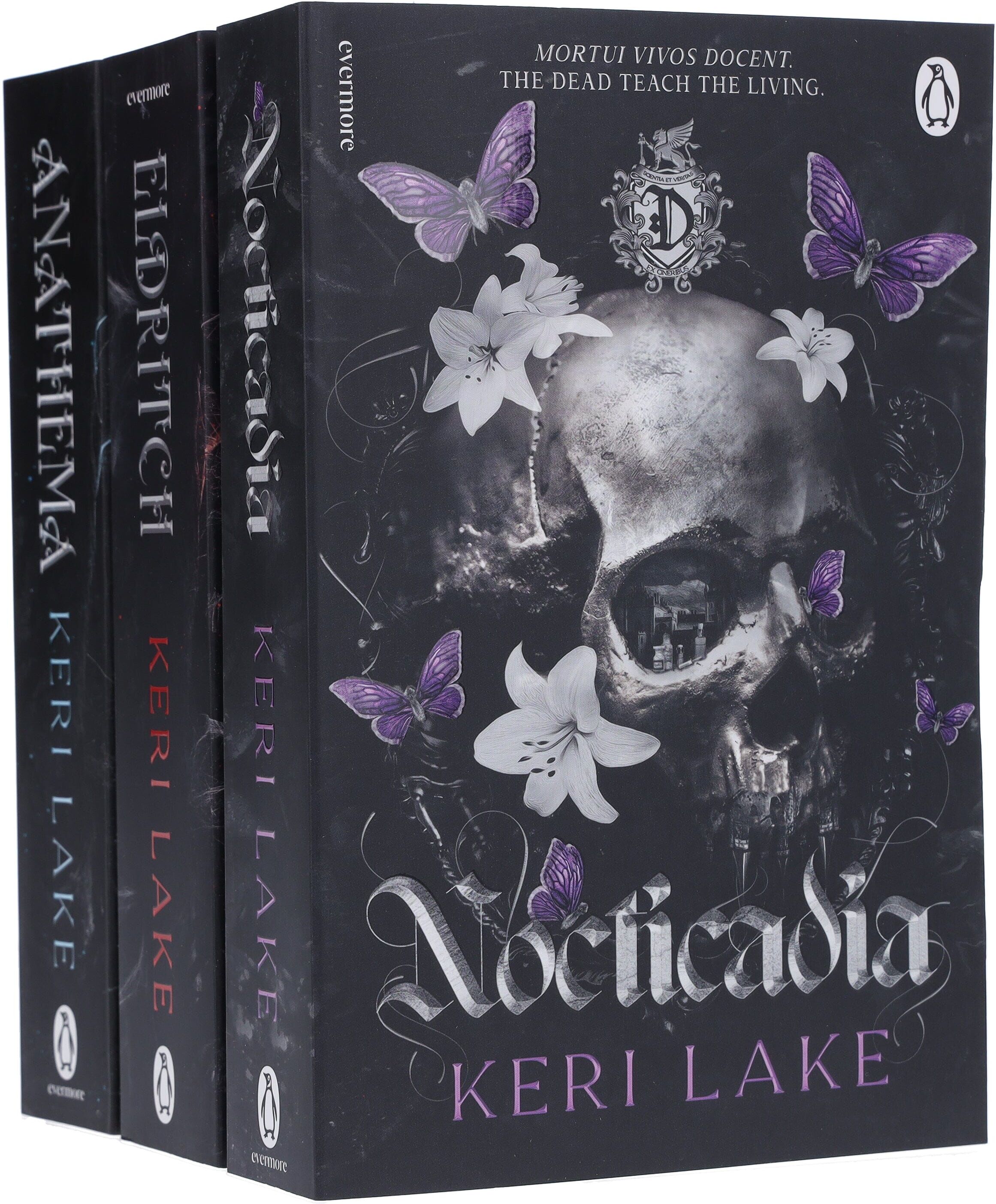
Keri Lake Collection (Anathema, Nocticadia & Eldritch) 3 Books Set - Fiction - Paperback Penguin Random HouseTitles in this Set: 1. Anathema 2. Nocticadia 3. Eldritch Description: Anathema Only the banished know what lies beyond the woods... There are whispers of what lurks in Witch Knell, the forest where sinners perish. The villagers call it The Eating Woods because what’s taken is never returned. Only the banished dare to approach. Maevyth Bronwick knows better than to enter the misty labyrinth, but tragedy forces her beyond the archway of bones into a dark, fantastical world. There dwells Zevander Rydainn, the cursed lord of Eidolon—a cold-blooded assassin—tasked with hiding her from the magehood that seeks her death. Zevander must protect Maevyth, whose blood can break his curse. But his growing obsession with her threatens to destroy everything. Including himself. Nocticadia After watching my mother succumb to a mysterious illness, I promised myself two things: I’d find the cure for what ravaged her—and leave the godforsaken city where she abandoned me. Four years later, I receive an acceptance letter from Dracadia University, a secluded, prestigious school on an island off the coast of Maine. Legends say it’s haunted by the exiled souls of long-dead patients. But the ghosts aren’t even its most daunting peculiarity. Devryck Bramwell, known on campus as Doctor Death, is my devastatingly handsome professor. He loathes first-years like me—yet his dark gaze tells me all the ways he’d devour me if given the chance, and his stolen kisses burn with forbidden jealousy. Together, we’re a toxic disaster waiting to be exposed. And when the truth surfaces, we may be the ones to resurrect Dracadia’s most depraved secret. Eldritch An eldritch magic has awakened, turning the mortal world darker. Colder. Famished. With flesh-eating monsters and a sinister curse spreading like a plague, the last glimmer of humanity in Foxglove Parish has long-since faded. For Maevyth and Zevander, the only chance of escape is through The Eating Woods. But fate has woven a new web, tangling the threads of destiny, and crossing the mystical boundary to Aethyria might not be so simple. As the bones of Maevyth’s past are unearthed, and truths unravel with unsettling clarity, the possibility of never leaving Mortasia is becoming more of a reality. Unfortunately for Zevander, time is running out. The longer he stays in the mortal lands, deprived of essential vivicantem, the more he succumbs to the encroaching specter of madness. Or maybe those chasing shadows are someone hunting him. A wretched evil closing in, threatening to pull him into the darkest corners of his mind. Only, this time, Maevyth may not have the power to save him.26,99 £*Shipping: 2,99 £Secure redirect to the provider
-
Philips MSD Platinum 20R Lamp for the Clay Paky MythosPhilips MSD Platinum 20R Lamp for the Clay Paky Mythos Clay Paky Mythos Specifications: Technology: High-intensity discharge Type: Metal Halide Watts: 470W Ends: Single-ended Overall Length: 72mm Diameter: 58.5mm Burning Position: Universal Arc...349,99 $*Shipping: 0,00 $Secure redirect to the provider
-
Penguin Stephen Fry Greek Myths Series 4 Books Collection Set (Mythos, Heroes, Troy and Odyssey)Stephen Fry Greek Myths Series 4 Books Collection Set (Mythos, Heroes, Troy & Odyssey): Mythos: In Stephen Fry's vivid retelling, we gaze in wonder as wise Athena is born from the cracking open of the great head of Zeus and follow doomed Persephone into the dark and lonely realm of the Underworld. We shiver in fear when Pandora opens her jar of evil torments and watch with joy as the legendary love affair between Eros and Psyche unfolds. Heroes: In this companion to his bestselling Mythos, Stephen Fry brilliantly retells these dramatic, funny, tragic and timeless tales.Join Jason aboard the Argo as he quests for the Golden Fleece. See Atalanta - who was raised by bears - outrun any man before being tricked with golden apples. Witness wily Oedipus solve the riddle of the Sphinx and discover how Bellerophon captures the winged horse Pegasus to help him slay the monster Chimera. Troy: When Helen, the beautiful Greek queen, is kidnapped by the Trojan prince Paris, the most legendary war of all time begins.Watch in awe as a thousand ships are launched against the great city of Troy.Feel the fury of the battleground as the Trojans stand resolutely against Greek might for an entire decade.And witness the epic climax - the wooden horse, delivered to the city of Troy in a masterclass of deception by the Greeks . . . Odyssey: Setting sail, hero Odysseus dreams of lying in the arms of his beloved wife Penelope, and of teaching his son Telemachus a warrior’s ways. However, gods toy with the desires of little mortals. Angered by this upstart’s presumption, Poseidon – God of the ocean realms – curses our hero to wander the seas for ten long years.29,99 £*Shipping: 2,99 £Secure redirect to the provider
-
Is it utilitarian or selfish?
It depends on the specific situation and context. Utilitarianism is a moral theory that focuses on maximizing overall happiness or well-being for the greatest number of people. If an action benefits the majority of individuals and promotes the greatest good, it can be considered utilitarian. On the other hand, if an action primarily serves one's own interests without regard for others, it may be seen as selfish. Ultimately, the distinction between utilitarian and selfish behavior is determined by the impact on others and the underlying intentions of the individual. **
-
What is a utilitarian action?
A utilitarian action is one that aims to maximize overall happiness or well-being for the greatest number of people. In utilitarianism, the morality of an action is determined by its consequences, with the most ethical action being the one that results in the greatest overall benefit. This ethical theory focuses on the outcomes of actions rather than the intentions behind them. Utilitarian actions prioritize the greatest good for the greatest number of individuals, often requiring individuals to make decisions that may not benefit themselves personally but benefit society as a whole. **
-
What is the correct utilitarian solution?
The correct utilitarian solution is to maximize overall happiness and minimize overall suffering for the greatest number of people. This means making decisions that result in the greatest net benefit for the majority of individuals, even if it may not benefit everyone equally. Utilitarianism focuses on the consequences of actions and seeks to promote the greatest good for the greatest number, taking into account the well-being of all individuals affected by the decision. It also emphasizes the importance of considering long-term effects and the potential impact on future generations. **
-
What is the utilitarian ethics of Bentham and Mill?
Utilitarian ethics, as proposed by Jeremy Bentham and John Stuart Mill, is a consequentialist theory that focuses on maximizing overall happiness or pleasure and minimizing pain or suffering. According to Bentham, actions should be judged based on their ability to produce the greatest amount of pleasure for the greatest number of people, known as the principle of utility. Mill expanded on this by introducing the concept of higher and lower pleasures, arguing that intellectual and moral pleasures are more valuable than physical pleasures. Both Bentham and Mill believed that the ultimate goal of ethics should be to promote the greatest happiness for the greatest number of individuals. **
Similar search terms for Utilitarian
-
Wordsworth Editions Great Horror & Fantasy 6 Books Collection Set – Dracula, Frankenstein & Classic Horror CollectionFrankenstein Frankenstein is the classic gothic horror novel which has thrilled and engrossed readers for two centuries. Written by Mary Shelley, it is a story which she intended would ‘curdle the blood and quicken the beatings of the heart.’ The tale is a superb blend of science fiction, mystery and thriller. Dracula 'There he lay looking as if youth had been half-renewed, for the white hair and moustache were changed to dark iron-grey, the cheeks were fuller, and the white skin seemed ruby-red underneath; the mouth was redder than ever, for on the lips were gouts of fresh blood, which trickled from the corners of the mouth and ran over the chin and neck. Even the deep, burning eyes seemed set amongst the swollen flesh, for the lids and pouches underneath were bloated. It seemed as if the whole awful creature were simply gorged with blood; he lay like a filthy leech, exhausted with his repletion. Dr Jekyll and Mr Hyde In seeking to discover his inner self, the brilliant Dr Jekyll discovers a monster. First published to critical acclaim in 1886, this mesmerising thriller is a terrifying study of the duality of man's nature, and it is the book which established Stevenson's reputation as a writer. The Turn of the Screw The Turn of the Screw is the classic ghost story for which James is most remembered. Set in a country house, it is a chilling tale of the supernatural told by a master of the genre. The Aspern Papers is a tale of Americans in Europe, a theme in which Henry James is at his most assured and accomplished. The author cleverly evokes the drama of comédie humaine against the settings of a Venetian palace. Collected Ghost Stories M.R. James is probably the finest ghost-story writer England has ever produced. These tales are not only classics of their genre, but are also superb examples of beautifully-paced understatement, convincing background and chilling terror. As well as the preface, there is a fascinating tail-piece by M.R. James, ‘Stories I Have Tried To Write’, which accompanies these thirty tales. Among them are ‘Casting the Runes’, ‘Oh, Whistle and I’ll come to you, My Lad’, ‘The Tractate Middoth’, ‘The Ash Tree’ and ‘Canon Alberic’s Scrapbook’. The Woman in White Wilkie Collins is a master of mystery, and The Woman in White is his first excursion into the genre. When the hero, Walter Hartright, on a moonlit night in north London, encounters a solitary, terrified and beautiful woman dressed in white, he feels impelled to solve the mystery of her distress.15,99 £*Shipping: 2,99 £Secure redirect to the provider
-
Uplift Picks Realistic Bloody Eyeball Halloween Horror Props Realistic Bloody Eyeball Halloween Horror PropsMake guests look twice with a gruesome detail that instantly intensifies your spooky setup. These bloody eyeball props feature realistic veins and a glossy eye design for a disturbing, lifelike appearance. Scatter them around party tables, candy...25,00 $*Shipping: 0,00 $Secure redirect to the provider
-
Inspired Finds Posable Human Skeleton Halloween Horror Decoration Posable Human Skeleton Halloween Horror DecorationBring your haunted setup to life with this posable Halloween skeleton, designed to add an eerie humanlike presence wherever you place it. The realistic boneinspired shape makes it a versatile Halloween skeleton decoration for haunted houses,...34,99 $*Shipping: 0,00 $Secure redirect to the provider
-
Inspired Living Realistic Bloody Eyeball Halloween Horror Prop Realistic Bloody Eyeball Halloween Horror PropTurn ordinary spooky dcor into a scene guests wont forget with this bloody eyeball Halloween decor. Designed with a gruesome, realistic look, this artificial eye adds instant shock value to haunted displays, party tables, costumes, and horror...23,97 $*Shipping: 0,00 $Secure redirect to the provider
-
What are the differences between deontological ethics and utilitarian ethics?
Deontological ethics, also known as duty-based ethics, focuses on the inherent rightness or wrongness of actions themselves, regardless of their consequences. It emphasizes following moral rules and duties, such as telling the truth or keeping promises, based on principles like the categorical imperative. On the other hand, utilitarian ethics, also known as consequentialist ethics, prioritizes the outcomes or consequences of actions. It aims to maximize overall happiness or well-being for the greatest number of people, often through the calculation of benefits and harms. While deontological ethics emphasizes duty and rules, utilitarian ethics prioritizes the greatest good for the greatest number. **
-
What is the difference between deontological ethics and utilitarian ethics?
Deontological ethics, also known as duty-based ethics, focuses on the inherent rightness or wrongness of actions themselves, regardless of their consequences. This means that certain actions are considered morally right or wrong based on whether they adhere to a set of rules or principles. On the other hand, utilitarian ethics, also known as consequentialist ethics, evaluates the morality of actions based on their outcomes or consequences. In utilitarianism, the rightness or wrongness of an action is determined by its ability to produce the greatest overall happiness or pleasure for the greatest number of people. **
-
What is a mystical or occult symbol?
A mystical or occult symbol is a visual representation that holds spiritual or esoteric significance. These symbols are often used in various mystical traditions, such as alchemy, astrology, and tarot, to convey hidden meanings or concepts beyond the physical realm. They are believed to possess magical or transformative powers and are used in rituals, meditation, and divination practices to connect with the divine or to unlock deeper levels of consciousness. Examples of mystical symbols include the pentagram, the Eye of Horus, and the ouroboros. **
-
How can one justify euthanasia from a utilitarian and deontological perspective?
From a utilitarian perspective, euthanasia can be justified if it results in the greatest overall happiness and minimizes suffering for the individual and their loved ones. If the person is in unbearable pain and their quality of life is extremely poor, euthanasia may be seen as the most compassionate choice to end their suffering. From a deontological perspective, euthanasia can be justified if it respects the individual's autonomy and right to make decisions about their own life and death. If the person has made a well-informed and voluntary decision to end their life, then it can be seen as morally permissible to honor their wishes. However, deontological ethics also emphasize the importance of respecting the sanctity of life, so the decision to pursue euthanasia should be carefully considered in light of these conflicting principles. **
* All prices are inclusive of VAT and, if applicable, plus shipping costs. The offer information is based on the details provided by the respective shop and is updated through automated processes. Real-time updates do not occur, so deviations can occur in individual cases. ** Note: Parts of this content were created by AI.