Buy cthirion.eu ?
We are moving the project
cthirion.eu .
Are you interested in purchasing the domain
cthirion.eu ?
domain@kv-gmbh.de · 0541-91531010
Buy cthirion.eu ?
Was Nietzsche antisemitic?
Nietzsche's views on Judaism and Jewish people have been a topic of debate among scholars. While some argue that Nietzsche's writings contain antisemitic undertones, others believe that his criticisms were directed towards specific individuals or groups rather than the Jewish people as a whole. It is important to consider the historical context in which Nietzsche lived and wrote, as well as the complexity of his philosophical ideas, when discussing his views on this topic. **
What is Nietzsche 3?
Nietzsche 3 refers to the third phase of Friedrich Nietzsche's philosophical development, following his earlier periods of the "Apollonian" and "Dionysian" phases. In this phase, Nietzsche focused on the concept of the "will to power," which emphasizes the individual's desire for self-overcoming and self-assertion. He believed that this will to power drives human behavior and is the underlying force behind all existence. Nietzsche 3 represents a shift towards a more individualistic and existential perspective in his philosophy. **

Similar search terms for Nietzsche
Top-Angebote
Products related to Nietzsche:
-
Wilco International LLP Beyond Good and Evil – Deluxe Hardback Sprayed Edge Edition by Friedrich Nietzsche Classic Philosophy & Literary ClassicExplore one of the most provocative works in modern philosophy with this stunning deluxe hardback sprayed edge edition of Beyond Good and Evil by Friedrich Nietzsche. In this groundbreaking philosophical work, Nietzsche challenges traditional morality and explores the complexities of truth, power, religion, and human nature. With sharp insight and bold ideas, he questions accepted beliefs and introduces concepts that have shaped modern thought and intellectual discourse. This premium edition features a beautiful hardback cover and sprayed edges, making it not only a powerful intellectual read but also a striking collectible for any bookshelf. Ideal for students, philosophy enthusiasts, and collectors, this edition offers both substance and style. Why Readers Love This Edition: Influential work of modern philosophy Written by renowned thinker Friedrich Nietzsche Elegant deluxe hardback with sprayed edges Explores morality, truth, power, and human nature Perfect for study, collecting, or gifting A timeless and thought-provoking classic, Beyond Good and Evil continues to inspire and challenge readers around the world.4,50 £*Shipping: 1,99 £Secure redirect to the provider
-
Arcturus The Classic Friedrich Nietzsche Collection 5 Books Box Set - Ecce Homo, Beyond Good and Evil, Thus Spake Zarathustra, Human All Too Human and MoreThis handsome five-volume box set brings together the classic works Friedrich Nietzsche, presented with striking contemporary cover designs. One of the most prominent thinkers of the 19th century, Nietzsche was a cultural critic and philosopher whose theories on truth, morality, nihilism and the meaning of existence have had enormous influence on Western philosophy. This box set contains his most prominent works, including: - Human, All Too Human - Thus Spake Zarathustra - Beyond Good and Evil - On the Genealogy of Morals - Ecce Homo These influential essay collections have profoundly shaped modern philosophy and remain as pertinent now as they ever were.16,99 £*Shipping: 2,99 £Secure redirect to the provider
-
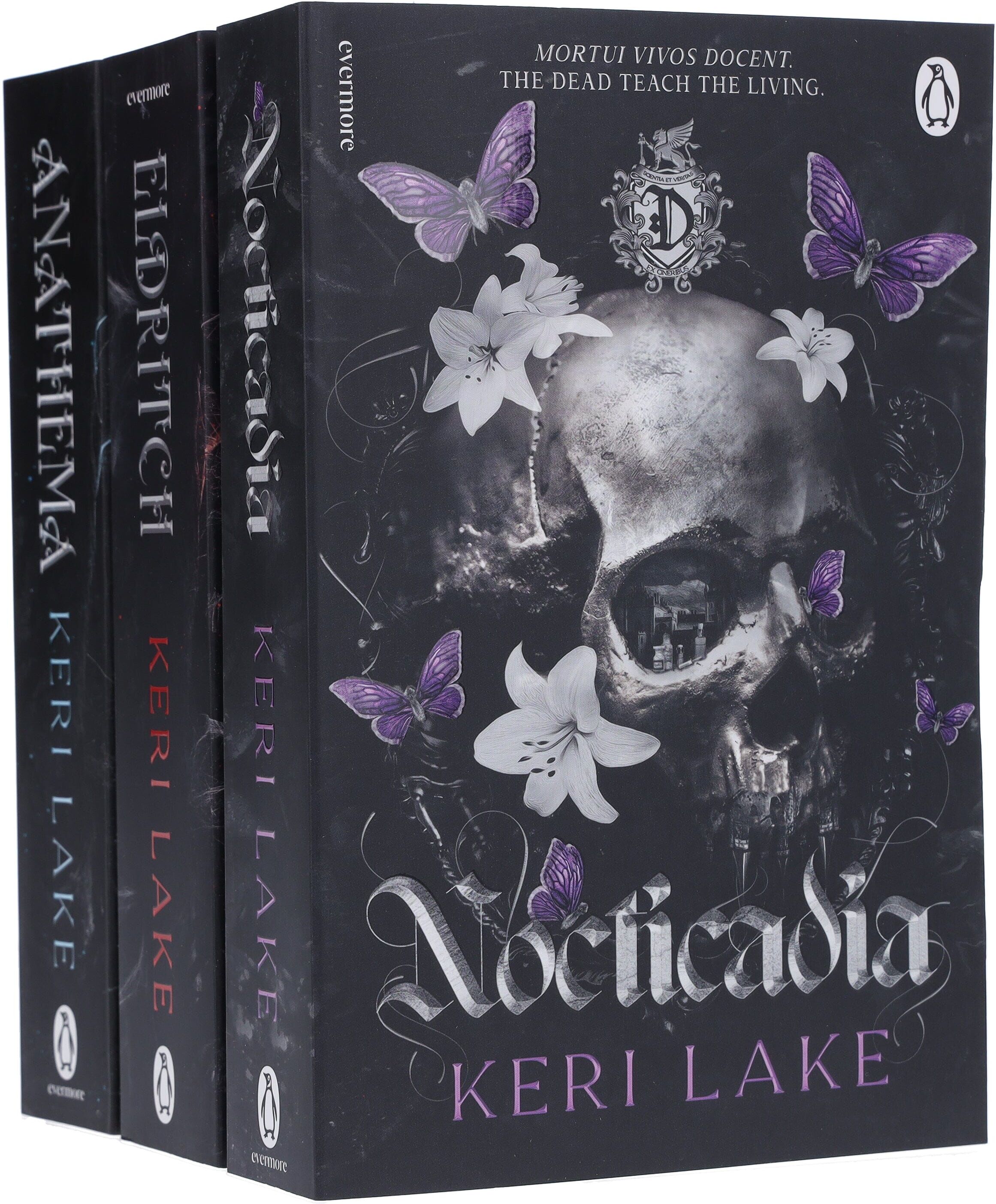
Keri Lake Collection (Anathema, Nocticadia & Eldritch) 3 Books Set - Fiction - Paperback Penguin Random HouseTitles in this Set: 1. Anathema 2. Nocticadia 3. Eldritch Description: Anathema Only the banished know what lies beyond the woods... There are whispers of what lurks in Witch Knell, the forest where sinners perish. The villagers call it The Eating Woods because what’s taken is never returned. Only the banished dare to approach. Maevyth Bronwick knows better than to enter the misty labyrinth, but tragedy forces her beyond the archway of bones into a dark, fantastical world. There dwells Zevander Rydainn, the cursed lord of Eidolon—a cold-blooded assassin—tasked with hiding her from the magehood that seeks her death. Zevander must protect Maevyth, whose blood can break his curse. But his growing obsession with her threatens to destroy everything. Including himself. Nocticadia After watching my mother succumb to a mysterious illness, I promised myself two things: I’d find the cure for what ravaged her—and leave the godforsaken city where she abandoned me. Four years later, I receive an acceptance letter from Dracadia University, a secluded, prestigious school on an island off the coast of Maine. Legends say it’s haunted by the exiled souls of long-dead patients. But the ghosts aren’t even its most daunting peculiarity. Devryck Bramwell, known on campus as Doctor Death, is my devastatingly handsome professor. He loathes first-years like me—yet his dark gaze tells me all the ways he’d devour me if given the chance, and his stolen kisses burn with forbidden jealousy. Together, we’re a toxic disaster waiting to be exposed. And when the truth surfaces, we may be the ones to resurrect Dracadia’s most depraved secret. Eldritch An eldritch magic has awakened, turning the mortal world darker. Colder. Famished. With flesh-eating monsters and a sinister curse spreading like a plague, the last glimmer of humanity in Foxglove Parish has long-since faded. For Maevyth and Zevander, the only chance of escape is through The Eating Woods. But fate has woven a new web, tangling the threads of destiny, and crossing the mystical boundary to Aethyria might not be so simple. As the bones of Maevyth’s past are unearthed, and truths unravel with unsettling clarity, the possibility of never leaving Mortasia is becoming more of a reality. Unfortunately for Zevander, time is running out. The longer he stays in the mortal lands, deprived of essential vivicantem, the more he succumbs to the encroaching specter of madness. Or maybe those chasing shadows are someone hunting him. A wretched evil closing in, threatening to pull him into the darkest corners of his mind. Only, this time, Maevyth may not have the power to save him.26,99 £*Shipping: 2,99 £Secure redirect to the provider
-
Philips MSD Platinum 20R Lamp for the Clay Paky MythosPhilips MSD Platinum 20R Lamp for the Clay Paky Mythos Clay Paky Mythos Specifications: Technology: High-intensity discharge Type: Metal Halide Watts: 470W Ends: Single-ended Overall Length: 72mm Diameter: 58.5mm Burning Position: Universal Arc...349,99 $*Shipping: 0,00 $Secure redirect to the provider


-
Did Nietzsche have depression?
There is no definitive answer to whether Nietzsche had depression as he was never formally diagnosed during his lifetime. However, many scholars and psychologists have analyzed his writings and personal correspondence and have suggested that he may have experienced symptoms of depression, such as feelings of despair, isolation, and nihilism. Nietzsche's own writings also reflect a deep sense of existential crisis and inner turmoil, which could be interpreted as indicative of depression. **
-
Are Friedrich Nietzsche demigods?
No, Friedrich Nietzsche was not a demigod. He was a philosopher and cultural critic known for his ideas on existentialism, morality, and the concept of the "Übermensch" or "overman." While his ideas have had a significant impact on philosophy and intellectual thought, he was a human being and not a supernatural or divine figure. It is important to approach his work critically and engage with his ideas in a thoughtful and analytical manner. **
-
How sick was Nietzsche?
Nietzsche suffered from various health issues throughout his life, including severe migraines, vision problems, and digestive problems. In 1889, he experienced a mental breakdown and was diagnosed with syphilis, which eventually led to his deteriorating mental and physical health. He spent the last 11 years of his life in a state of mental and physical decline, eventually becoming completely incapacitated. His illness and decline greatly impacted his ability to continue his philosophical work and led to his eventual death in 1900. **
-
How can one understand Nietzsche?
To understand Nietzsche, one must delve into his philosophical works and writings to grasp his ideas and concepts. It is important to study his key themes such as the will to power, the eternal recurrence, and the concept of the Ubermensch. Additionally, one should consider the historical context in which Nietzsche was writing, as well as his personal background and influences. Engaging with secondary sources and interpretations can also provide valuable insights into Nietzsche's complex and often controversial philosophy. **

Was Nietzsche friendly towards war?
Nietzsche had a complex and often contradictory relationship with war. On one hand, he was critical of the destructive and senseless nature of war, and he believed that it could lead to the decline of civilization. However, he also saw war as a potential catalyst for the emergence of a new, stronger society, and he believed that it could serve as a means of overcoming decadence and promoting the development of a higher human type. Overall, Nietzsche's views on war were nuanced and evolved over time, reflecting his broader philosophical concerns about power, struggle, and the potential for human advancement. **
Who is God for Nietzsche?
For Nietzsche, God is a symbol of the ultimate authority and source of morality that has been imposed on humanity by traditional religious institutions. He sees God as a projection of human weakness and a tool used by those in power to control and manipulate the masses. Nietzsche famously declared that "God is dead," meaning that the traditional concept of God as a moral authority no longer holds sway in modern society. Instead, he calls for the creation of a new, individualistic morality that is not dependent on the existence of a divine being. **
Top-Angebote
Products related to Nietzsche:
-
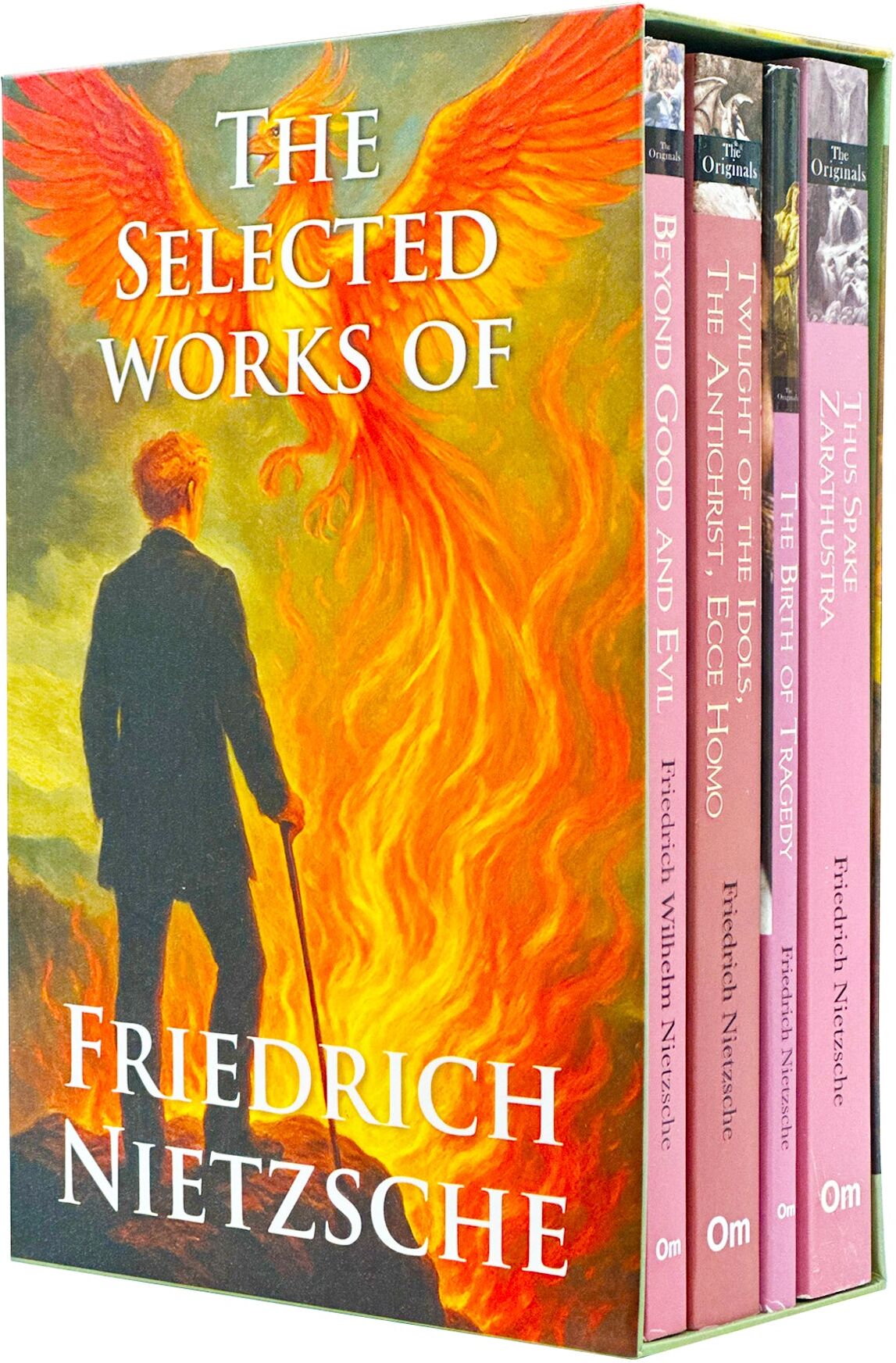
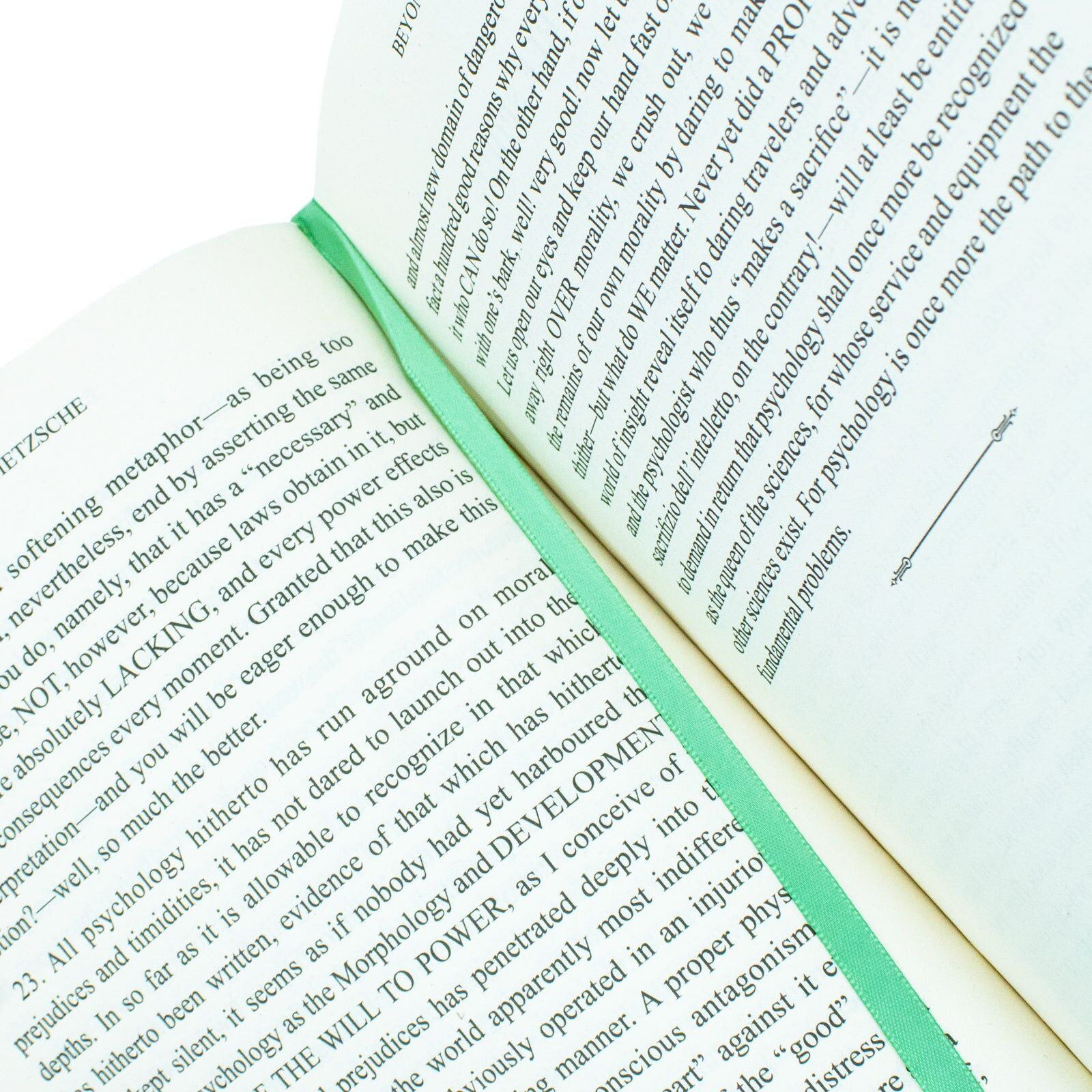
OM Books The Selected Works of Friedrich Nietzsche 4 Books Collection SetThe works of Friedrich Nietzsche, German philosopher and cultural critic, influenced Western philosophy and intellectual history. This box set brings together his most influential works that include his radical critique of truth in favour of perspectivisim; a genealogical critique of religion and Christian morality; the aesthetic affirmation of life and the profound crisis of nihilism; and a charaterisation of the human subject as the expression of competing wills.12,95 £*Shipping: 2,99 £Secure redirect to the provider
-
The Complete Works of Friedrich Nietzsche 6 Books Box Collection Set - Non Fiction - Paperback Classic EditionsTitles in this set: 1. The Twilight Of The Idols 2. Beyond Good And Evil 3. Human, All Too Human 4. Ecce Homo 5. Thus Spake Zarathustra 6. On The Genealogy Of Morals Titles in this Set: The Twilight Of The Idols The Twilight of the Idols by Friedrich Nietzsche is an examination and destruction of the antiquated ideals and values of the time. In this work, the author is on a warpath against reason. The attacks on contemporary philosophers are frequently hostile, and the suggested opinions, often devastating However, it shows a deep understanding of morality and man's mean-spiritedness, while keeping alive an underlying feeling of optimism and affirmation. Beyond Good And Evil Beyond Good and Evil is Friedrich Nietzsche's seminal work that delves further into the concept previously discussed in Thus Spoke Zarathustra. First published in 1886, this book tackles the debate between an individual's feeling to stand out among others and our desire to serve others. This book explores a wide gamut of themes what is considered evil today was perhaps believed to be good before, an analysis of Christian morality, deep insights into human psychology, the concept of nationalism. This masterpiece of aphorisms continues to inspire thinkers even now. Human, All Too Human A series of maxims on everything from passion, science, vanity, women, and youth, to art, arrogance, and boredom, Human, All Too Human was referred to by Nietzsche himself as "the monument of a crisis" because it was produced during a period of profound change in his life. With his new "positivism" and scepticism, Nietzsche challenged his earlier metaphysical and psychological presumptions. Here, almost all of the issues from his later work are presented in highly witty language with a distinctive perceptiveness and honesty, not to mention mistrust and cynicism. It is still one of the foundational books for comprehending Nietzsche's philosophy. Ecce Homo Ecce Homo: How One Becomes What One Is was written in German by philosopher Friedrich Nietzsche in 1888. It was not published until 1908. Nietzsche traces his life and offers his own interpretation of his development as a philosopher He emphatically points out how unique his ideas are. He shows himself as separate from the masses who give in to self-indulgent feelings of pity. He announces boldly about how he does not feel remorse. He fully submits himself to his fatalistic beliefs and accepts life as it comes. The book contains several chapters with ironic self-laudatory titles, such as "Why I Am So Wise", "Why 1 Am So Clever", and " Why 1 Am a Destiny". Half-mocking and half-earnest, Ecce Homo is the definitive expression of Nietzsche's core beliefs. Thus Spake Zarathustra Friedrich Nietzsche's Thus Spake Zarathustra, published in four volumes between 1883 and 1885, is a work of philosophical fiction which seeks to address the problem of existence in a world where "God is dead". The author's search for meaning culminates in Zarathustra, the...12,89 £*Shipping: 2,99 £Secure redirect to the provider
-
Wilco International LLP Beyond Good and Evil – Deluxe Hardback Sprayed Edge Edition by Friedrich Nietzsche Classic Philosophy & Literary ClassicExplore one of the most provocative works in modern philosophy with this stunning deluxe hardback sprayed edge edition of Beyond Good and Evil by Friedrich Nietzsche. In this groundbreaking philosophical work, Nietzsche challenges traditional morality and explores the complexities of truth, power, religion, and human nature. With sharp insight and bold ideas, he questions accepted beliefs and introduces concepts that have shaped modern thought and intellectual discourse. This premium edition features a beautiful hardback cover and sprayed edges, making it not only a powerful intellectual read but also a striking collectible for any bookshelf. Ideal for students, philosophy enthusiasts, and collectors, this edition offers both substance and style. Why Readers Love This Edition: Influential work of modern philosophy Written by renowned thinker Friedrich Nietzsche Elegant deluxe hardback with sprayed edges Explores morality, truth, power, and human nature Perfect for study, collecting, or gifting A timeless and thought-provoking classic, Beyond Good and Evil continues to inspire and challenge readers around the world.4,50 £*Shipping: 1,99 £Secure redirect to the provider
-
Arcturus The Classic Friedrich Nietzsche Collection 5 Books Box Set - Ecce Homo, Beyond Good and Evil, Thus Spake Zarathustra, Human All Too Human and MoreThis handsome five-volume box set brings together the classic works Friedrich Nietzsche, presented with striking contemporary cover designs. One of the most prominent thinkers of the 19th century, Nietzsche was a cultural critic and philosopher whose theories on truth, morality, nihilism and the meaning of existence have had enormous influence on Western philosophy. This box set contains his most prominent works, including: - Human, All Too Human - Thus Spake Zarathustra - Beyond Good and Evil - On the Genealogy of Morals - Ecce Homo These influential essay collections have profoundly shaped modern philosophy and remain as pertinent now as they ever were.16,99 £*Shipping: 2,99 £Secure redirect to the provider
-
Was Nietzsche antisemitic?
Nietzsche's views on Judaism and Jewish people have been a topic of debate among scholars. While some argue that Nietzsche's writings contain antisemitic undertones, others believe that his criticisms were directed towards specific individuals or groups rather than the Jewish people as a whole. It is important to consider the historical context in which Nietzsche lived and wrote, as well as the complexity of his philosophical ideas, when discussing his views on this topic. **
-
What is Nietzsche 3?
Nietzsche 3 refers to the third phase of Friedrich Nietzsche's philosophical development, following his earlier periods of the "Apollonian" and "Dionysian" phases. In this phase, Nietzsche focused on the concept of the "will to power," which emphasizes the individual's desire for self-overcoming and self-assertion. He believed that this will to power drives human behavior and is the underlying force behind all existence. Nietzsche 3 represents a shift towards a more individualistic and existential perspective in his philosophy. **
-
Did Nietzsche have depression?
There is no definitive answer to whether Nietzsche had depression as he was never formally diagnosed during his lifetime. However, many scholars and psychologists have analyzed his writings and personal correspondence and have suggested that he may have experienced symptoms of depression, such as feelings of despair, isolation, and nihilism. Nietzsche's own writings also reflect a deep sense of existential crisis and inner turmoil, which could be interpreted as indicative of depression. **
-
Are Friedrich Nietzsche demigods?
No, Friedrich Nietzsche was not a demigod. He was a philosopher and cultural critic known for his ideas on existentialism, morality, and the concept of the "Übermensch" or "overman." While his ideas have had a significant impact on philosophy and intellectual thought, he was a human being and not a supernatural or divine figure. It is important to approach his work critically and engage with his ideas in a thoughtful and analytical manner. **
Similar search terms for Nietzsche
-
Keri Lake Collection (Anathema, Nocticadia & Eldritch) 3 Books Set - Fiction - Paperback Penguin Random HouseTitles in this Set: 1. Anathema 2. Nocticadia 3. Eldritch Description: Anathema Only the banished know what lies beyond the woods... There are whispers of what lurks in Witch Knell, the forest where sinners perish. The villagers call it The Eating Woods because what’s taken is never returned. Only the banished dare to approach. Maevyth Bronwick knows better than to enter the misty labyrinth, but tragedy forces her beyond the archway of bones into a dark, fantastical world. There dwells Zevander Rydainn, the cursed lord of Eidolon—a cold-blooded assassin—tasked with hiding her from the magehood that seeks her death. Zevander must protect Maevyth, whose blood can break his curse. But his growing obsession with her threatens to destroy everything. Including himself. Nocticadia After watching my mother succumb to a mysterious illness, I promised myself two things: I’d find the cure for what ravaged her—and leave the godforsaken city where she abandoned me. Four years later, I receive an acceptance letter from Dracadia University, a secluded, prestigious school on an island off the coast of Maine. Legends say it’s haunted by the exiled souls of long-dead patients. But the ghosts aren’t even its most daunting peculiarity. Devryck Bramwell, known on campus as Doctor Death, is my devastatingly handsome professor. He loathes first-years like me—yet his dark gaze tells me all the ways he’d devour me if given the chance, and his stolen kisses burn with forbidden jealousy. Together, we’re a toxic disaster waiting to be exposed. And when the truth surfaces, we may be the ones to resurrect Dracadia’s most depraved secret. Eldritch An eldritch magic has awakened, turning the mortal world darker. Colder. Famished. With flesh-eating monsters and a sinister curse spreading like a plague, the last glimmer of humanity in Foxglove Parish has long-since faded. For Maevyth and Zevander, the only chance of escape is through The Eating Woods. But fate has woven a new web, tangling the threads of destiny, and crossing the mystical boundary to Aethyria might not be so simple. As the bones of Maevyth’s past are unearthed, and truths unravel with unsettling clarity, the possibility of never leaving Mortasia is becoming more of a reality. Unfortunately for Zevander, time is running out. The longer he stays in the mortal lands, deprived of essential vivicantem, the more he succumbs to the encroaching specter of madness. Or maybe those chasing shadows are someone hunting him. A wretched evil closing in, threatening to pull him into the darkest corners of his mind. Only, this time, Maevyth may not have the power to save him.26,99 £*Shipping: 2,99 £Secure redirect to the provider
-
Philips MSD Platinum 20R Lamp for the Clay Paky MythosPhilips MSD Platinum 20R Lamp for the Clay Paky Mythos Clay Paky Mythos Specifications: Technology: High-intensity discharge Type: Metal Halide Watts: 470W Ends: Single-ended Overall Length: 72mm Diameter: 58.5mm Burning Position: Universal Arc...349,99 $*Shipping: 0,00 $Secure redirect to the provider
-
Penguin Stephen Fry Greek Myths Series 4 Books Collection Set (Mythos, Heroes, Troy and Odyssey)Stephen Fry Greek Myths Series 4 Books Collection Set (Mythos, Heroes, Troy & Odyssey): Mythos: In Stephen Fry's vivid retelling, we gaze in wonder as wise Athena is born from the cracking open of the great head of Zeus and follow doomed Persephone into the dark and lonely realm of the Underworld. We shiver in fear when Pandora opens her jar of evil torments and watch with joy as the legendary love affair between Eros and Psyche unfolds. Heroes: In this companion to his bestselling Mythos, Stephen Fry brilliantly retells these dramatic, funny, tragic and timeless tales.Join Jason aboard the Argo as he quests for the Golden Fleece. See Atalanta - who was raised by bears - outrun any man before being tricked with golden apples. Witness wily Oedipus solve the riddle of the Sphinx and discover how Bellerophon captures the winged horse Pegasus to help him slay the monster Chimera. Troy: When Helen, the beautiful Greek queen, is kidnapped by the Trojan prince Paris, the most legendary war of all time begins.Watch in awe as a thousand ships are launched against the great city of Troy.Feel the fury of the battleground as the Trojans stand resolutely against Greek might for an entire decade.And witness the epic climax - the wooden horse, delivered to the city of Troy in a masterclass of deception by the Greeks . . . Odyssey: Setting sail, hero Odysseus dreams of lying in the arms of his beloved wife Penelope, and of teaching his son Telemachus a warrior’s ways. However, gods toy with the desires of little mortals. Angered by this upstart’s presumption, Poseidon – God of the ocean realms – curses our hero to wander the seas for ten long years.29,99 £*Shipping: 2,99 £Secure redirect to the provider
-
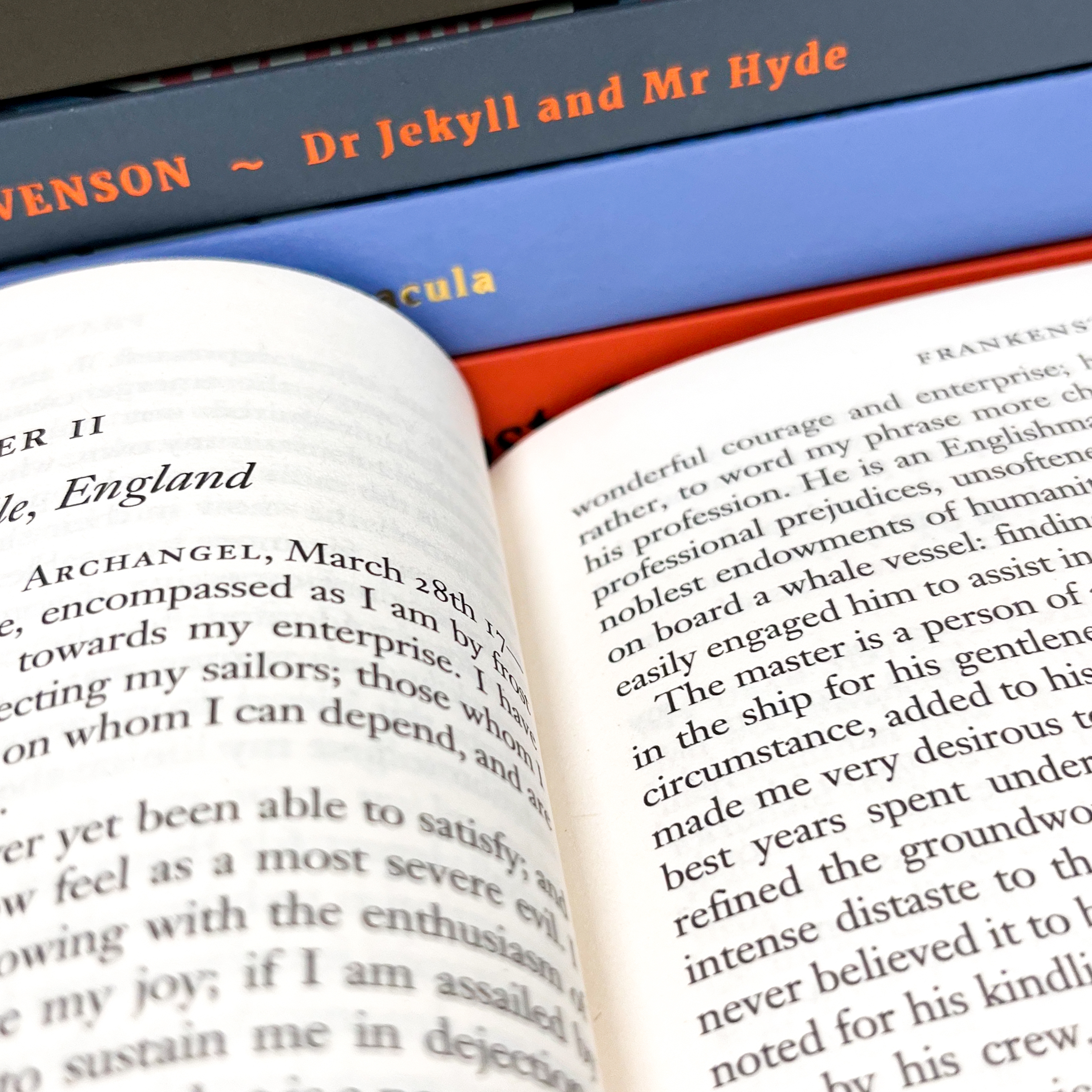
Wordsworth Editions Great Horror & Fantasy 6 Books Collection Set – Dracula, Frankenstein & Classic Horror CollectionFrankenstein Frankenstein is the classic gothic horror novel which has thrilled and engrossed readers for two centuries. Written by Mary Shelley, it is a story which she intended would ‘curdle the blood and quicken the beatings of the heart.’ The tale is a superb blend of science fiction, mystery and thriller. Dracula 'There he lay looking as if youth had been half-renewed, for the white hair and moustache were changed to dark iron-grey, the cheeks were fuller, and the white skin seemed ruby-red underneath; the mouth was redder than ever, for on the lips were gouts of fresh blood, which trickled from the corners of the mouth and ran over the chin and neck. Even the deep, burning eyes seemed set amongst the swollen flesh, for the lids and pouches underneath were bloated. It seemed as if the whole awful creature were simply gorged with blood; he lay like a filthy leech, exhausted with his repletion. Dr Jekyll and Mr Hyde In seeking to discover his inner self, the brilliant Dr Jekyll discovers a monster. First published to critical acclaim in 1886, this mesmerising thriller is a terrifying study of the duality of man's nature, and it is the book which established Stevenson's reputation as a writer. The Turn of the Screw The Turn of the Screw is the classic ghost story for which James is most remembered. Set in a country house, it is a chilling tale of the supernatural told by a master of the genre. The Aspern Papers is a tale of Americans in Europe, a theme in which Henry James is at his most assured and accomplished. The author cleverly evokes the drama of comédie humaine against the settings of a Venetian palace. Collected Ghost Stories M.R. James is probably the finest ghost-story writer England has ever produced. These tales are not only classics of their genre, but are also superb examples of beautifully-paced understatement, convincing background and chilling terror. As well as the preface, there is a fascinating tail-piece by M.R. James, ‘Stories I Have Tried To Write’, which accompanies these thirty tales. Among them are ‘Casting the Runes’, ‘Oh, Whistle and I’ll come to you, My Lad’, ‘The Tractate Middoth’, ‘The Ash Tree’ and ‘Canon Alberic’s Scrapbook’. The Woman in White Wilkie Collins is a master of mystery, and The Woman in White is his first excursion into the genre. When the hero, Walter Hartright, on a moonlit night in north London, encounters a solitary, terrified and beautiful woman dressed in white, he feels impelled to solve the mystery of her distress.15,99 £*Shipping: 2,99 £Secure redirect to the provider
-
How sick was Nietzsche?
Nietzsche suffered from various health issues throughout his life, including severe migraines, vision problems, and digestive problems. In 1889, he experienced a mental breakdown and was diagnosed with syphilis, which eventually led to his deteriorating mental and physical health. He spent the last 11 years of his life in a state of mental and physical decline, eventually becoming completely incapacitated. His illness and decline greatly impacted his ability to continue his philosophical work and led to his eventual death in 1900. **
-
How can one understand Nietzsche?
To understand Nietzsche, one must delve into his philosophical works and writings to grasp his ideas and concepts. It is important to study his key themes such as the will to power, the eternal recurrence, and the concept of the Ubermensch. Additionally, one should consider the historical context in which Nietzsche was writing, as well as his personal background and influences. Engaging with secondary sources and interpretations can also provide valuable insights into Nietzsche's complex and often controversial philosophy. **
-
Was Nietzsche friendly towards war?
Nietzsche had a complex and often contradictory relationship with war. On one hand, he was critical of the destructive and senseless nature of war, and he believed that it could lead to the decline of civilization. However, he also saw war as a potential catalyst for the emergence of a new, stronger society, and he believed that it could serve as a means of overcoming decadence and promoting the development of a higher human type. Overall, Nietzsche's views on war were nuanced and evolved over time, reflecting his broader philosophical concerns about power, struggle, and the potential for human advancement. **
-
Who is God for Nietzsche?
For Nietzsche, God is a symbol of the ultimate authority and source of morality that has been imposed on humanity by traditional religious institutions. He sees God as a projection of human weakness and a tool used by those in power to control and manipulate the masses. Nietzsche famously declared that "God is dead," meaning that the traditional concept of God as a moral authority no longer holds sway in modern society. Instead, he calls for the creation of a new, individualistic morality that is not dependent on the existence of a divine being. **
* All prices are inclusive of VAT and, if applicable, plus shipping costs. The offer information is based on the details provided by the respective shop and is updated through automated processes. Real-time updates do not occur, so deviations can occur in individual cases. ** Note: Parts of this content were created by AI.